How Tinted Sunscreen Combines Sun Protection With Light Coverage
For a long time, sunscreen and complexion products lived in separate lanes. You wore SPF for protection, then reached for foundation, skin tint, or concealer if you wanted your skin to look more even. Tinted sunscreen has changed that routine in a useful way. It doesn’t replace a full makeup bag, and it shouldn’t be mistaken for a high-coverage base, but it does solve a very real everyday problem: how to protect your skin properly while taking the edge off redness, uneven tone, or post-blemish marks.
That combination is exactly why tinted formulas have become more than a trend. They’re practical, especially for people who want a streamlined morning routine and don’t love the feel of layering multiple products before 9 a.m.
Why tinted sunscreen is more than a cosmetic extra
At its core, tinted sunscreen is still sunscreen. Its primary job is to shield skin from ultraviolet radiation, including UVA rays that contribute to photoageing and UVB rays associated with sunburn. But the “tinted” part isn’t just there to make skin look better for a few hours.
In many formulas, that tint comes from iron oxides or other pigments, which can also help defend the skin from visible light. That matters more than many people realize. Visible light, particularly high-energy blue light and broader daylight exposure, has been linked to worsening hyperpigmentation in deeper skin tones and in people prone to melasma. In other words, a good tinted sunscreen may offer an extra layer of support that clear SPF alone doesn’t always provide.
This is one reason dermatologists often recommend tinted mineral sunscreens for patients managing pigmentation concerns. If your skin tends to darken after a breakout, heat, or sun exposure, a formula with pigment can do double duty: it helps prevent further UV damage while softening the appearance of existing discoloration.
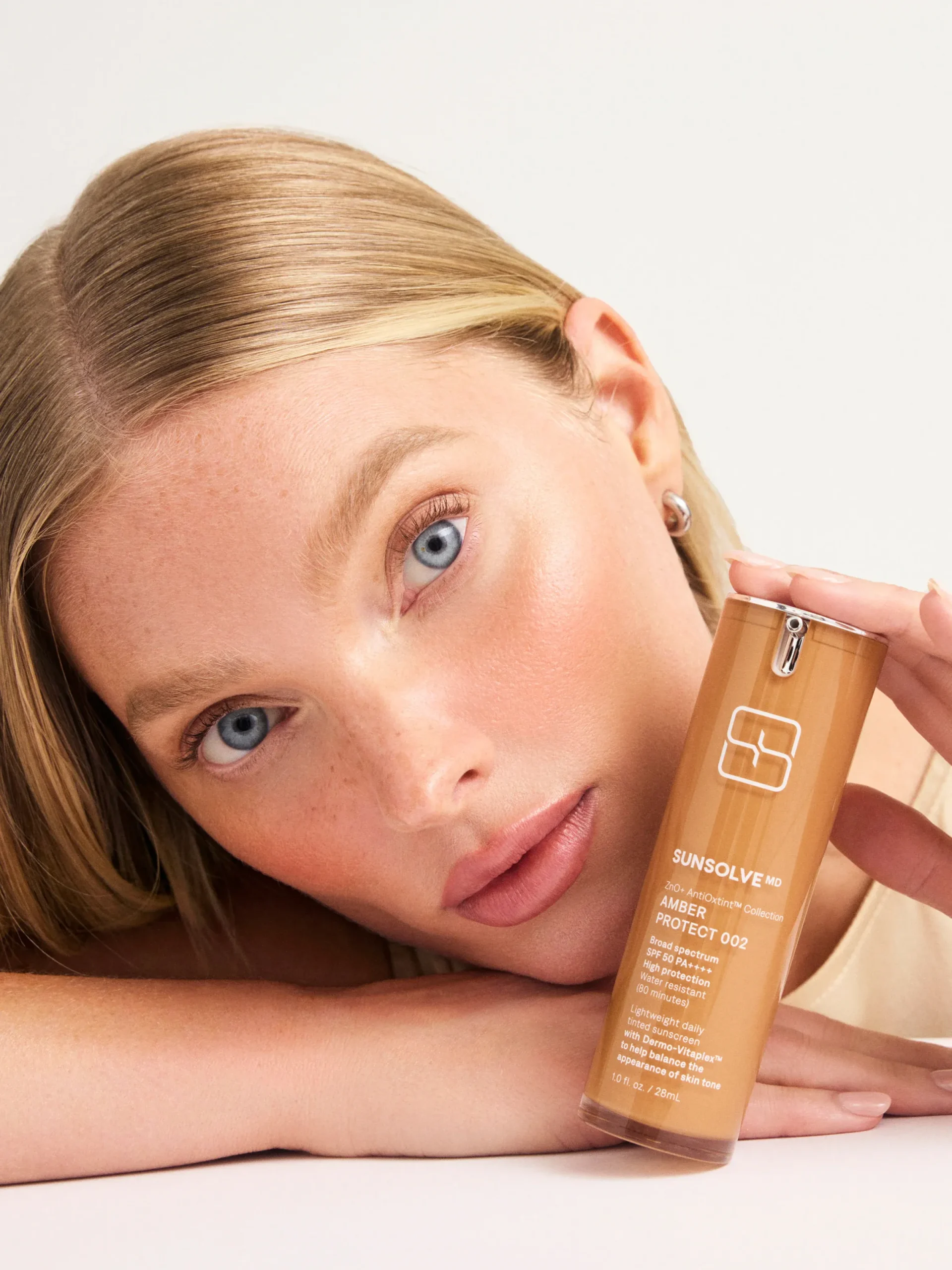
How light coverage fits into real life
The appeal of tinted sunscreen isn’t that it turns sunscreen into makeup. It’s that it bridges the gap between skincare and cosmetics in a believable, wearable way.
It evens things out without looking “done”
Most tinted sunscreens offer sheer to light coverage. That level is enough to blur minor redness around the nose, tone down the look of dark spots, and create a more consistent overall complexion. You still look like yourself. Skin still looks like skin. For many people, that’s the sweet spot.
It’s especially useful on days when full foundation feels excessive, whether you’re working from home, heading to the gym, or just want a low-maintenance finish. Instead of layering SPF, primer, and base product, you can often get close to the same visual effect with one well-formulated step.
Just as importantly, the tint can solve a common complaint associated with mineral sunscreen: cast. Zinc oxide and titanium dioxide are effective filters, but they can leave a whitish film, especially on medium to deep skin tones. Pigment helps counter that, making formulas more wearable across a wider range of complexions. For anyone interested in how newer products are addressing that challenge, this category of skin-tone adapting UV protection skincare reflects how far tinted SPF has come from the one-shade-fits-none versions of the past.
What makes a tinted sunscreen work well
Not all tinted sunscreens are equally helpful, and the best one for you depends on more than shade alone.
Texture matters as much as tint
A sunscreen can have a beautiful color match and still be frustrating if it pills, slides, or settles into dry patches. The most wearable formulas tend to balance protection with finish. Some lean dewy and skincare-like, which suits drier skin. Others dry down more satin or matte, which can be easier for oilier or acne-prone complexions.
A few things are worth considering when choosing one:
- Dry or dehydrated skin: look for hydrating ingredients like glycerin, squalane, or hyaluronic acid.
- Oily skin: lighter fluids or gel-cream textures often feel more comfortable through the day.
- Sensitive skin: mineral-based formulas are often better tolerated, especially around the eyes.
- Pigmentation concerns: iron oxide-containing formulas may provide added support against visible-light-triggered darkening.
Shade flexibility also matters. Because most tinted sunscreens are sheer, they don’t need the same exact match as a foundation. But they do need to disappear into the skin without turning orange, grey, or ashy. That’s where undertone and adaptability make a real difference.
The biggest mistake people make with tinted SPF
The most common problem is simple: not applying enough.
Coverage is not the goal; protection is
People tend to apply tinted sunscreen like makeup, using a pea-sized amount and blending it out sparingly. That may look nice, but it usually isn’t enough to deliver the SPF level printed on the bottle. Sunscreen testing is based on a generous application, roughly the equivalent of two fingers’ length for the face and neck combined.
If that sounds like a lot for a tinted product, it is. And that’s why formula elegance matters so much. A tinted sunscreen has to spread well, feel comfortable, and still look natural when used in a truly protective amount.
A practical approach is to apply it in two thin layers rather than one thick coat. That often improves both the finish and the likelihood that you’ll use enough. If you need extra coverage, add concealer only where necessary instead of treating tinted SPF like a foundation.
Reapplication still counts
Tinted sunscreen isn’t a one-and-done solution if you’re outdoors for hours, sweating, or wiping your face. Reapplication is still essential. That can be awkward over makeup, but it’s easier when your base product is already SPF-based and fairly sheer. Some people reapply with another thin layer of tinted sunscreen; others use a clear SPF over the top and accept that the initial tint handled the cosmetic side earlier in the day.
Why the category keeps growing
Tinted sunscreen sits at the intersection of two shifts in beauty and skincare. The first is the move toward multifunctional products that genuinely save time. The second is a broader understanding that sunscreen has to be wearable to become a daily habit.
That’s the real value here. A sunscreen that offers light coverage won’t replace every complexion product, and it doesn’t need to. Its strength is subtler than that. It makes sun protection easier to stick with by giving people an immediate, visible payoff: skin looks a bit more even, a bit more polished, and still feels like skin.
When a product helps you protect your skin and feel comfortable wearing enough of it, that’s not clever marketing. It’s good formulation meeting real life.