How Restylane Supports Natural-Looking Facial Rejuvenation
The most noticeable cosmetic work is rarely the best kind. When facial rejuvenation is done well, people tend to comment that someone looks rested, fresher, or somehow more like themselves again. That shift in expectation has changed the conversation around injectables. Increasingly, patients are not asking to look dramatically different; they want subtle correction, better balance, and skin that reflects how they actually feel.
That is part of the reason hyaluronic acid fillers remain such a mainstay in aesthetic medicine. Among them, Restylane has built a strong reputation for supporting natural-looking outcomes when it is used with restraint and a clear understanding of facial anatomy. The goal is not to “fill” a face in the blunt sense of the word. It is to replace what time has thinned, soften shadows, and restore structure where it has gradually faded.
Why Natural Rejuvenation Depends on More Than Volume
Ageing in the face is often simplified as a problem of lines and wrinkles, but the real picture is more layered. Skin quality changes, fat pads shift, collagen declines, and bone support subtly remodels over time. That means a natural result cannot come from treating one visible fold in isolation. It requires understanding how different parts of the face work together.
The shift from correction to restoration
A decade ago, many filler treatments focused on chasing individual lines. Today, experienced practitioners think more globally. Hollowing beneath the eyes may make the mid-face look tired. Loss of cheek support can deepen the nasolabial folds. Reduced definition along the jawline may affect how the whole lower face reads, even if the skin itself is in reasonable condition.
This broader approach matters because natural rejuvenation is usually less about adding obvious volume and more about restoring proportion. When done thoughtfully, the face still moves normally, expressions remain intact, and the result does not look “treated.”
How Restylane Fits Into a Subtle Rejuvenation Plan
Restylane is a family of hyaluronic acid fillers, and that distinction is important. Hyaluronic acid is a substance already found in the body, where it helps retain moisture and support tissue hydration. In injectable form, it can be used to address age-related volume loss, contour certain areas, and soften lines without surgery.
What makes Restylane especially useful for natural-looking work is that different formulations are designed for different tissue depths and treatment goals. A practitioner is not using the exact same product in the lips, cheeks, and tear troughs and hoping for the best. They are selecting a filler with particular properties—such as softness, lift capacity, and integration into tissue—based on the area being treated.
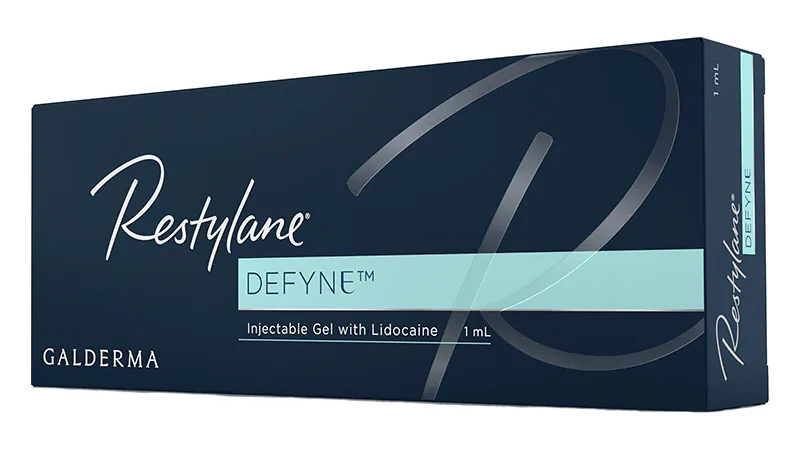
For readers who want a practical overview of how this category of injectable is used in clinic settings, this guide to Restylane dermal filler treatment gives useful context around common treatment areas and what to expect from the process.
Why product choice affects the final look
A natural result is often the product of precision rather than quantity. Thicker, more supportive fillers may work well where structural definition is needed, such as the cheeks or jawline. Softer formulations may be more appropriate in areas where movement and delicacy matter, like around the mouth. If the filler does not match the tissue characteristics of the area, the result can look heavy, puffy, or simply out of place.
That is why “natural-looking filler” is not really a product claim. It is the outcome of good assessment, careful product selection, and conservative technique.
Where Restylane Can Make the Biggest Difference
Not every feature needs to be changed for the face to look more refreshed. In fact, some of the best results come from targeting one or two key areas.
Mid-face support
Cheek volume tends to diminish gradually, often long before people recognize it consciously. Restoring subtle support in the mid-face can soften lower-face heaviness and improve facial balance without making the cheeks look overfilled. This is often one of the most efficient ways to create a fresher appearance.
Under-eye hollowing
The tear trough area is delicate and not suitable for every patient, but in the right hands it can be treated very effectively. Even a small amount of carefully placed filler may reduce shadowing that creates a tired look. The emphasis here is always restraint. Too much product under the eyes tends to look unnatural quickly.
Lips and perioral lines
Natural lip rejuvenation is not synonymous with larger lips. Sometimes the aim is hydration, border definition, or restoring the small amount of volume lost with age. Around the mouth, softening etched lines can make the lower face appear less drawn without altering expression.
What Actually Determines Whether Results Look Natural
Patients often focus on the brand of filler, but technique is just as important as the product itself.
Assessment comes before injection
A good consultation looks at facial shape, asymmetry, skin quality, and movement. It also considers what should not be treated. Some concerns are better addressed with skin treatments, collagen stimulation, or simply leaving well enough alone. The most trustworthy aesthetic plans are usually the ones that show restraint.
Less is often more
One of the clearest industry trends in recent years is the move toward staged treatment. Rather than trying to achieve a complete transformation in one visit, many practitioners prefer to start conservatively and reassess. This reduces the risk of overcorrection and gives the face time to settle naturally.
A subtle result usually depends on a few principles:
- restoring support rather than chasing every line
- treating in proportion to the rest of the face
- using the right filler for the right layer of tissue
- avoiding repeated top-ups before previous product has properly settled
Movement matters
Faces are dynamic. We smile, squint, frown, and talk all day. A filler result that looks acceptable at rest but awkward in motion will not read as natural. This is why experienced injectors pay attention to placement depth, expression patterns, and how light reflects on the face after treatment.
A Modern View of Rejuvenation
The appeal of Restylane is not that it promises a different face. It is that, when used appropriately, it can support the version of your face that has become less visible over time. Fuller structure, softer transitions, improved hydration, better balance—these are modest changes individually, yet together they can make a person look noticeably refreshed.
Natural-looking facial rejuvenation is rarely about doing more. It is about understanding anatomy, using well-matched products, and respecting the character of the face in front of you. Restylane fits well into that philosophy because it allows for nuanced treatment rather than a one-size-fits-all approach.
In the end, the best aesthetic outcome is usually the one that does not announce itself. It simply lets someone look awake, healthy, and comfortably like themselves.