How Freezer Room Hire Helps Prevent Storage Bottlenecks
Cold storage bottlenecks rarely arrive with much warning. One week, capacity looks manageable; the next, a seasonal order spike, delayed outbound shipment, or equipment issue has stock backing up faster than your team can move it. For food businesses, that kind of pressure is more than inconvenient. It can disrupt production schedules, compromise stock rotation, and create real risks around food safety and waste.
That is why freezer room hire has become a practical option for businesses that need flexibility without committing to permanent expansion. It is not simply about finding extra space. Used well, temporary freezer capacity can protect workflow, smooth out demand swings, and buy operations teams time to make better decisions.
Why storage bottlenecks happen so easily
Cold storage systems tend to operate with less slack than many people realise. Ambient warehousing can often absorb short-term overflow with some creative reorganisation. Frozen stock is different. It needs tightly controlled conditions, reliable access, and a layout that supports safe handling and efficient stock movement.
Demand changes faster than infrastructure
Many food businesses are working with demand patterns that are increasingly difficult to predict. Promotions land harder than expected. Retailers adjust order volumes with little lead time. Hospitality contracts ramp up for events or holiday periods. Import and export delays push product into storage for longer than planned.
When that happens, fixed freezer capacity becomes a constraint. Even a well-run site can hit a point where there is simply nowhere sensible to place incoming stock.
Bottlenecks spread across the operation
The problem is rarely confined to one room. Once frozen storage is close to full, knock-on effects start appearing elsewhere:
- Goods-in slows because pallets cannot be put away quickly
- Picking becomes less efficient as teams work around overcrowded layouts
- Stock rotation suffers, increasing the risk of older product being missed
- Production planning gets harder because finished goods have nowhere to go
In other words, a storage issue quickly becomes an operational issue.
Temporary capacity can solve a structural problem
One common mistake is to treat capacity pressure as a sign that a business immediately needs a permanent facility upgrade. Sometimes that is true. Just as often, though, the issue is timing rather than long-term space shortages.
A freezer room hired for a busy period, short-term contract, or transitional phase can remove pressure exactly where it builds. That gives the business room to keep moving without overcommitting capital or rushing into a major site change.
For example, a manufacturer preparing for peak seasonal distribution may only need extra frozen space for six to eight weeks. A wholesaler changing premises may need a buffer while stock transfers are phased. A catering supplier with a sudden contract win may need rapid additional storage while forecasting catches up with reality. In each case, the challenge is real, but it may not justify building permanent extra capacity.
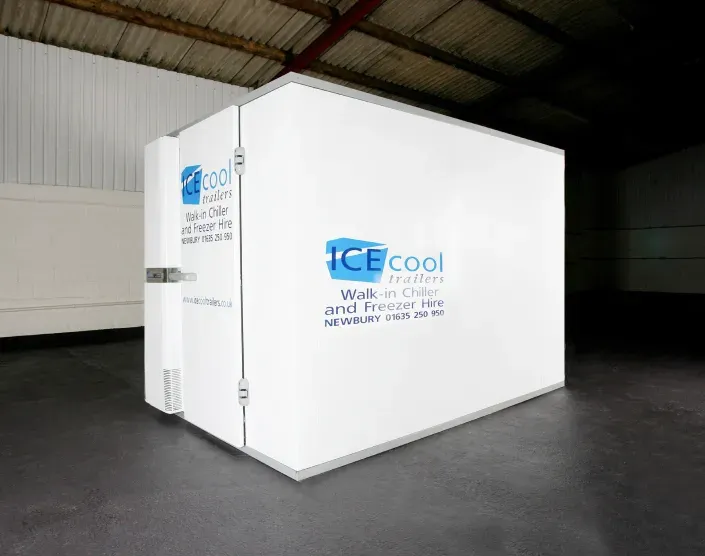
That is where solutions such as freezer room hire for commercial food storage fit naturally into the picture. They allow businesses to increase cold storage capacity quickly, often with far less disruption than trying to reconfigure existing facilities under pressure.
The operational benefits go beyond extra square footage
The most obvious advantage of freezer room hire is space. But in practice, its value often shows up in the parts of the operation that are hardest to protect when sites get congested.
It preserves stock flow
When space is tight, teams tend to make compromises. Pallets are staged in less-than-ideal areas. Access routes narrow. Put-away takes longer. None of that helps throughput.
Adding temporary freezer capacity can restore a more orderly flow. Incoming stock can be separated properly, fast-moving items can remain accessible, and picking routes can be kept workable. That matters because efficiency losses in frozen operations are expensive. Labour time stretches, vehicle turnaround slows, and small delays ripple through the day.
It supports food safety and quality control
Overcrowded storage is not just inefficient; it increases risk. Poor access can make temperature monitoring, cleaning, and stock checks more difficult. Products may spend too long in transfer areas while teams juggle space constraints. Rotation discipline can weaken when the storage layout stops making sense.
A hired freezer room gives businesses breathing room to maintain basic standards properly. That is especially important during peak periods, when the temptation to “just make it fit” is strongest.
It improves planning, not just storage
There is also a decision-making benefit. Bottlenecks create urgency, and urgency tends to produce bad operational choices. When teams are constantly firefighting, they are less able to evaluate inventory levels, review production schedules, or plan dispatches calmly.
Temporary capacity creates a buffer. And buffers are powerful. They reduce the cost of short-term uncertainty, which means managers can respond with intent rather than improvisation.
When hiring makes the most sense
Not every storage issue calls for an external solution, but certain scenarios are a strong fit.
Peak periods and promotional surges
Businesses with predictable seasonal spikes often know the pressure is coming; they just do not need year-round capacity to cover it. Hiring freezer space for a defined window can be far more sensible than carrying permanent overhead for a problem that only exists part of the year.
Equipment failure or maintenance downtime
If an on-site freezer goes offline, continuity becomes the priority. Temporary hire can act as a bridge while repairs or replacements are handled, preventing a technical problem from turning into a stock emergency.
Site transitions and growth phases
Expansion does not always happen neatly. You may win new business before your facility is fully ready for it, or outgrow your layout before capital projects are approved. In those in-between periods, hired freezer rooms can keep service levels stable while the business catches up.
Making freezer room hire work in practice
The best results come when temporary storage is treated as part of the operating plan, not a last-minute overflow patch. Think through stock type, access needs, dwell times, and how goods will move between areas. If the hired space supports a clear process, it will relieve pressure effectively. If it becomes a dumping ground, the bottleneck just shifts location.
That is the broader lesson here. Storage bottlenecks are rarely about volume alone. They are about flow, timing, and resilience. Freezer room hire works because it gives businesses flexibility at exactly the point where rigid infrastructure tends to fail.
For commercial food operations dealing with fluctuating demand, short-term disruption, or growth in transition, that flexibility can be the difference between staying in control and constantly playing catch-up.